

certification-roi
Do IT Certifications Actually Help Your Career?
An honest look at when IT certifications genuinely advance a career, when they do not, and how to decide based on what you are trying to prove.
Job search, career switching, certification ROI, salary negotiation, remote work, and freelancing. Everything you need to get ahead in tech.
Certifications open doors - but knowing how to walk through those doors takes career strategy. From breaking into IT without a degree to negotiating a senior engineering compensation package, from landing a remote role at a tech company to building a freelance consulting practice, the career decisions you make matter as much as the credentials you earn.
This collection covers the full career lifecycle for IT professionals: entry-level career planning for those just starting out, career switching guides for professionals transitioning from other fields, job search tactics for active candidates, salary and promotion negotiation, remote and international work, and freelancing and entrepreneurship for those building independent practices.
What you will find: Actionable roadmaps from people who have made the transitions themselves, salary data by role and certification level, negotiation scripts and frameworks, and honest assessments of certification ROI across different career paths.
IT bootcamps and online courses for career entry and advancement
12 articlesHow to plan and advance your IT career with a deliberate roadmap
13 articlesHow to transition into IT from a non-technical field
10 articlesWhich certifications pay off most and how to calculate certification ROI
11 articlesHow to start and grow a freelance IT consulting practice
10 articlesEffective job search strategies for IT and tech roles
10 articlesOptimizing your LinkedIn profile for IT career opportunities
9 articlesHow to earn promotions and negotiate salary increases in IT
9 articlesFinding remote IT jobs and advancing your career in distributed teams
1 articlesVisa pathways and interview preparation for international IT professionals
1 articlesAn honest look at when IT certifications genuinely advance a career, when they do not, and how to decide based on what you are trying to prove.

2025 IT career roadmaps: cloud engineering, cybersecurity, DevOps, data engineering, and networking. Salary ranges, certifications, and demand analysis.

Realistic guide to switching careers into IT at 30, 40, or 50. Covers timelines, certification paths, salary expectations, financial planning, and age-specific strategies.

Where to find fully remote IT jobs in 2025. Covers dedicated remote job boards, remote-first companies, LinkedIn search techniques, scam detection, and salary expectations.

Data-driven ranking of IT certifications by salary premium in 2025. Covers cloud, security, project management, and emerging certs with real compensation numbers.

Honest comparison of SRE and DevOps engineer roles covering 2024 compensation data, skill divergence, interview differences, and how to choose the right path.

A realistic 6 to 18 month path from helpdesk to SOC analyst covering certifications, home lab setup, internal transfer tactics, salary data, and the interview process.

A realistic multi-year IT career roadmap covering entry-level tracks, mid-career pivots, senior engineer positioning, and the certifications that compound in value.

Honest evaluation of IT bootcamps: costs, outcomes, curriculum, and whether they are worth $10,000-$20,000. Covers cybersecurity, cloud, and networking programs.

How to break into IT without direct work experience. Covers entry-level certifications, portfolio projects, homelab building, target role selection, and the mistakes that waste job search time.

How to start an IT freelance practice and land your first clients. Covers rates, specialties, legal setup, platforms, and the reputation engine that drives referrals.

How to follow up after IT job applications at each stage of the hiring process. Covers timing, message templates, thank-you notes, competing offer notifications, and when to stop following up.

Clear definitions of entry-level IT job titles including Help Desk, SysAdmin, Junior Cloud Engineer, and SOC Analyst. Covers required skills, salary ranges, and career paths for each role.
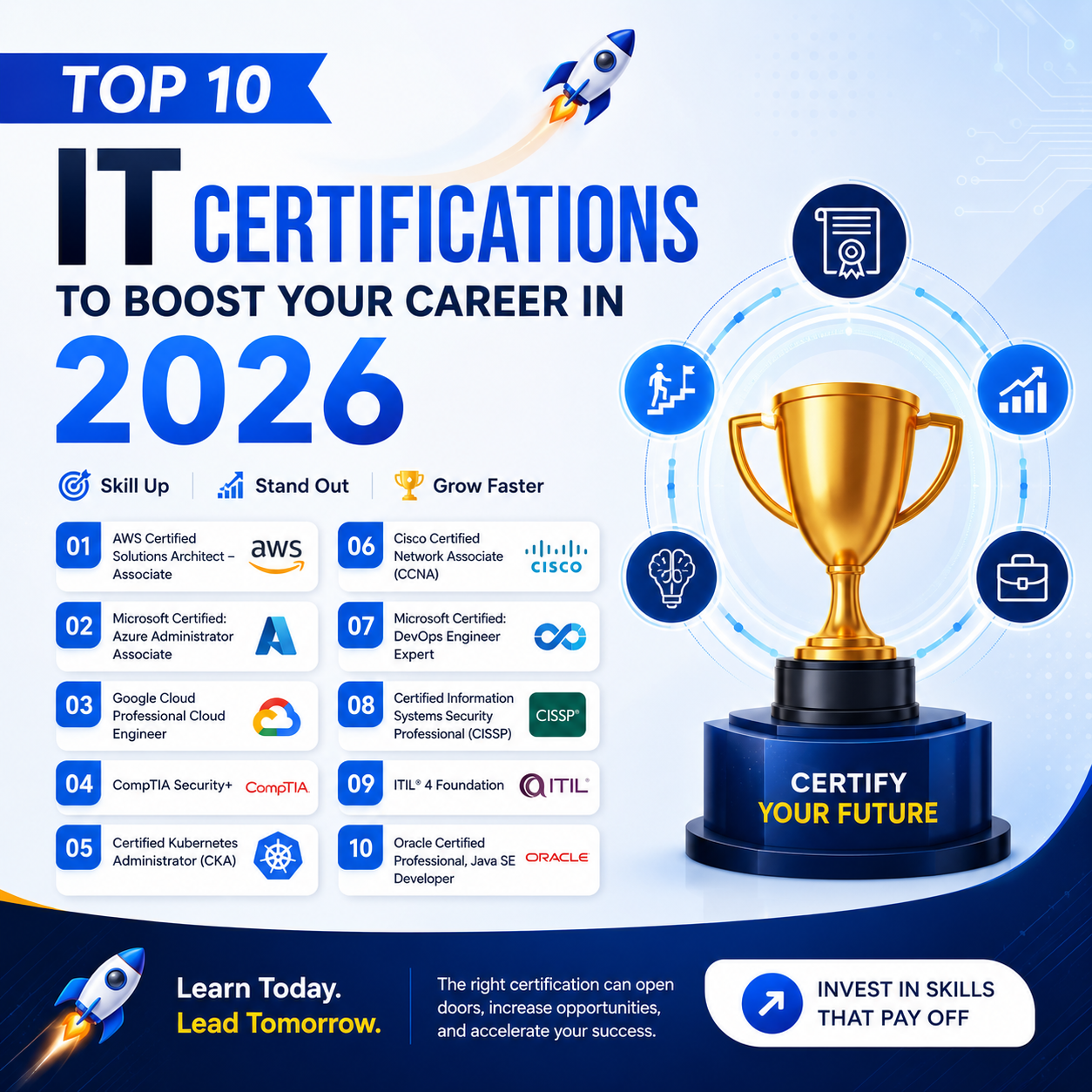
A data-backed ranking of IT certifications by interview-generating value. Covers AWS SAA, Security+, CCNA, CKA, CISSP and others by posting frequency, salary premium, and recruiter filter usage.
Comparison of the IT job market across cloud computing, cybersecurity, networking, and DevOps. Covers salary ranges, growth projections, talent gaps, and who should target each specialization.
Realistic IT job search timelines by role type and career level. Covers help desk, cloud, DevOps, security, networking, and management roles with data on what compresses or extends search duration.
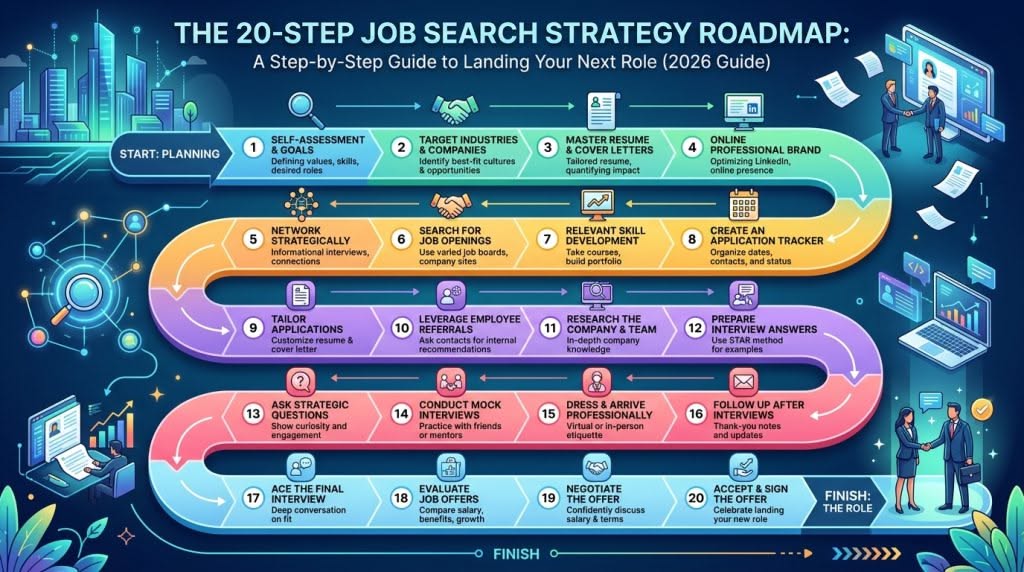
A structured IT job search strategy covering targeting, positioning, networking, and tracking. Real data on response rates, timelines by role level, and common mistakes that extend searches.

How to optimize your LinkedIn profile for IT job search visibility and write outreach messages that get responses. Covers headlines, skills, certifications, recruiter contact, and hiring manager messaging.
How to optimize your IT resume for ATS systems and hiring managers. Covers keyword architecture, formatting pitfalls, skills section structure, and tailoring for specific roles.
Why referrals outperform job boards in IT hiring and how to build the professional relationships that produce them. Covers informational interviews, community channels, and networking cadence.

Step-by-step guide to building a documented promotion case in IT. Covers impact measurement, next-level behavior, sponsorship, timing, and presentation strategy.

Five proven LinkedIn headline formulas for IT professionals. Learn how recruiters search LinkedIn and which keywords, certifications, and formats get you found.

Complete H-1B visa guide for IT professionals. Covers the registration process, lottery odds, costs, timeline, employer requirements, and path to permanent residency.

Total compensation guide for IT professionals: base salary, RSUs, bonuses, 401k match, benefits valuation, startup equity evaluation, and total comp offer comparison framework.

How IT professionals prepare for performance reviews: year-round accomplishment documents, self-assessment writing, compensation conversations, and handling difficult reviews.

IT salary negotiation tactics: market research sources, first number anchoring, total compensation negotiation, new job offers, annual raises, and BATNA leverage for tech professionals.

IT promotion timelines by career level and company type: how long promotions take, the visibility problem, certifications that accelerate promotion, and sponsors vs. mentors.

How IT engineers transition to management: IC vs. manager differences, staff engineer alternative, building management skills before the title, and certifications for the management track.

How IT professionals evaluate job offers: six dimensions including total compensation, technical environment, growth opportunity, culture, stability, and logistics with a scoring framework.

IT career progression guide: expectations at each level, what separates fast progressors from plateauers, specialization vs. generalist strategy, and certifications as progression signals.

How IT professionals get strong LinkedIn recommendations: who to ask, what to say, recommendation portfolio mix, and how to request effectively.

How IT professionals ask for raises: timing your request, preparing market data, the raise conversation structure, negotiating beyond base salary, and handling a denial.

LinkedIn profile optimization for IT professionals: headline keywords, About section, certifications, skills, featured section, and activity tips for recruiter visibility.

LinkedIn networking for IT professionals: who to connect with, content strategy, commenting tactics, certification networking, and building a long-term professional network.

How IT professionals should write their LinkedIn experience section: outcome-focused bullets, quantifying IT achievements, job title optimization, and career gap handling.

LinkedIn content strategy for IT professionals: what to post, the high-performing post formula, content calendar framework, articles vs posts, and measuring effectiveness.

LinkedIn keywords for IT professionals: which terms recruiters search, where to place them, keyword gap analysis method, and common keyword mistakes to avoid.

IT freelance vs full-time employment comparison: true financial analysis, non-financial trade-offs, when each is better, hybrid approach, and savings needed to go freelance.

LinkedIn About section examples for IT professionals: cloud engineers, cybersecurity analysts, network engineers, and career changers with frameworks and what to avoid.

How IT professionals should list certifications on LinkedIn: required fields, certification priority, Credly integration, verification links, and common entry errors.

IT freelance hourly rates guide: market rates by specialty, the rate calculation formula, project vs hourly pricing, platform rates, and how to raise rates with existing clients.

IT freelance contract guide: essential contract sections, IP ownership clauses, limitation of liability, payment terms, scope of work, and handling payment disputes.

IT freelance portfolio guide: case study structure, sample deliverables, testimonials, portfolio formats, and how to build a portfolio without client history.

IT freelance taxes guide: self-employment tax, quarterly estimated payments, deductible expenses, retirement accounts, S-Corp structure, and whether to use an accountant.

DevOps freelancing guide: service types, CKA and AWS DevOps certifications, portfolio building, finding clients, rate setting, and structuring the consulting business.

How IT freelancers find clients: warm outreach, freelance platforms, LinkedIn content marketing, direct outreach, referral management, and building a consistent pipeline.

Cloud architecture freelancing guide: service types, credentials required, portfolio building, client sources, project pricing, and multi-cloud expertise value.

PMP certification ROI: salary premiums, preparation requirements, agile exam changes, IT project manager specialization salaries, and PMP vs MBA for IT careers.

Cybersecurity freelancing guide: specialization selection, required credentials, service packaging, pricing, E&O insurance, and finding the first security consulting clients.

IT certification salary increases for 2025: ranked premiums for CISSP, AWS SAP, CKA, Security+, and more, with data by career stage and geographic market.
Breaking into IT without a degree is absolutely achievable in 2025. The most effective path: earn 1-2 entry-level certifications (CompTIA A+ and Network+ are the standard starting points), build a portfolio of hands-on projects (home lab, GitHub repositories, or cloud projects in a free-tier account), apply for helpdesk or IT support roles as your entry point, and use each role to build experience and earn the next certification. Certifications serve as the credential substitute that proves your skills objectively.
Entry-level certifications like CompTIA A+ typically provide 5-15% salary improvement when moving from non-IT to IT roles. Mid-level certifications like AWS Solutions Architect Associate or CCNA correlate with 15-25% salary premiums over non-certified peers. Expert-level certifications like CISSP or CCIE often push salaries above $120,000-$150,000. The highest ROI certifications in 2025 are cloud (AWS, Azure), cybersecurity (CISSP, Security+), and DevOps/Kubernetes credentials.
A structured career switch into IT typically takes 6-18 months. Phase 1 (1-3 months): build foundational knowledge with CompTIA A+ or Google IT Support Professional Certificate. Phase 2 (2-4 months): earn a specialization certification in your target domain. Phase 3 (ongoing): apply for entry-level roles and build a portfolio through personal projects. Helpdesk experience for 1-2 years provides the foundation for more specialized roles.
Advancing to senior roles requires depth of expertise in a specific domain, demonstrated impact on business outcomes, and leadership or mentoring experience. Build depth by pursuing professional-level certifications and taking on complex projects. Demonstrate impact by quantifying your contributions. Develop leadership by mentoring junior colleagues, leading technical projects, and presenting to stakeholders.
Remote work is widespread in IT, especially for cloud, DevOps, cybersecurity, software development, and senior infrastructure roles. To land a remote role: target fully remote-first companies, highlight remote work experience and self-management skills, demonstrate proficiency with remote collaboration tools, and be prepared to work across time zones. Certifications become more important for remote roles because they objectively verify your skills without the informal trust-building of in-person work.
Yes, IT certifications are highly valuable for freelancing because they objectively validate your skills to clients. High-demand freelance areas include: cloud architecture and migration (AWS, Azure consultants command $150-250/hour), cybersecurity assessments, DevOps and Kubernetes implementation, and Salesforce customization. Start with platforms like Upwork or Toptal to build reviews, then transition to direct client relationships.
Visa interviews for IT professionals vary significantly by destination country and visa type. For H-1B (US): document your specialty occupation and educational credentials. For UK Skilled Worker visa: confirm your role qualifies and your salary meets the threshold. For Canada Express Entry: maximize your CRS score through education, language scores, and Canadian job offers. Certifications can strengthen your profile by demonstrating expertise equivalent to degree credentials in technical evaluation frameworks used by many immigration programs.