
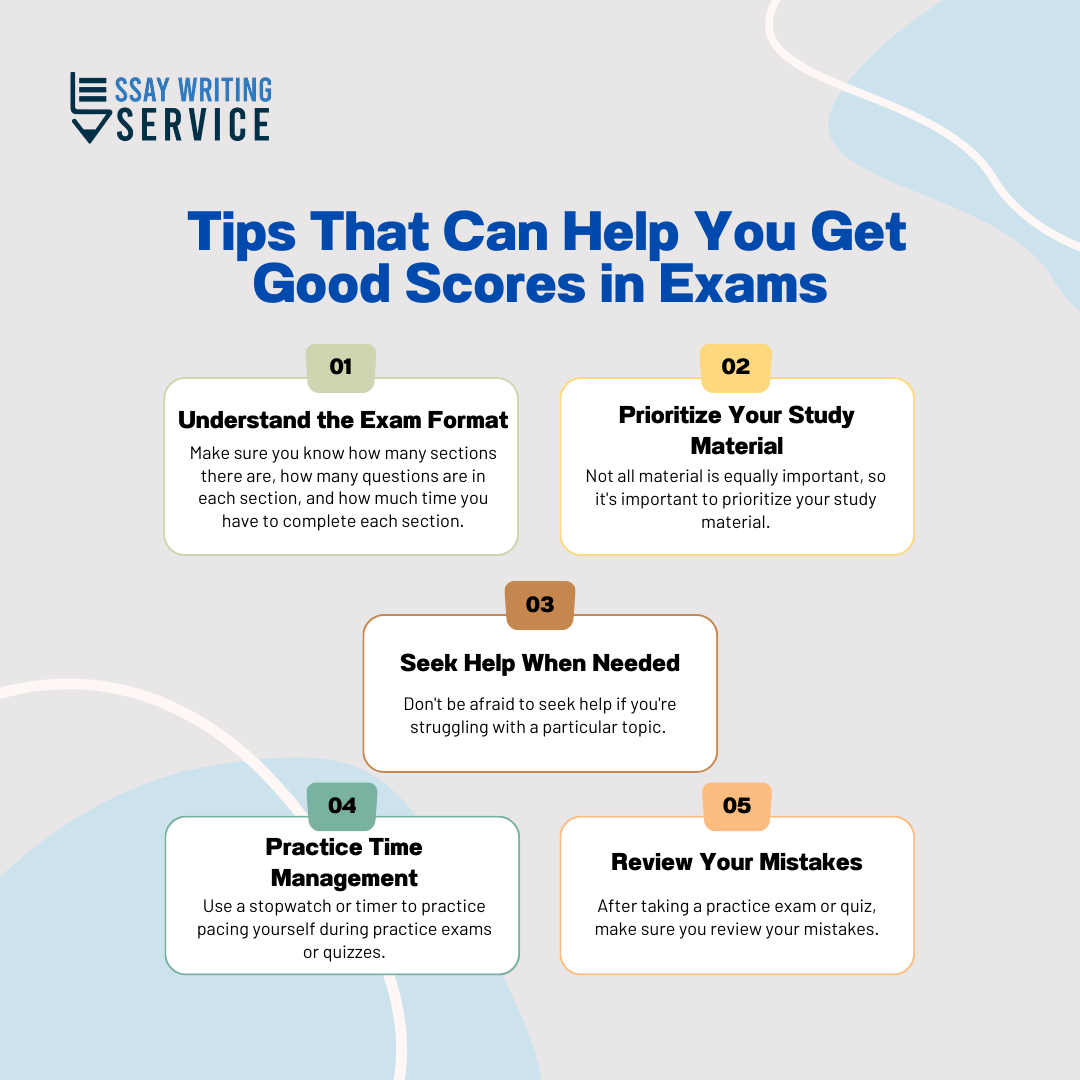
What does my practice exam score actually tell me about real exam readiness?
A practice exam score reflects your current knowledge state under the specific conditions of that practice session. It is a predictor, not a guarantee. Consistently scoring above the exam's passing threshold across multiple practice exams, with no single domain below 70%, is the most reliable readiness indicator. Single scores -- especially early in preparation -- are diagnostic tools, not readiness verdicts.
Practice exam scores are one of the most important feedback signals in certification preparation, but they require careful interpretation. A single practice score can overstate or understate your actual readiness based on the conditions under which you took it, the quality of the questions, and where you are in your preparation arc.
Understanding how to interpret scores -- and how not to interpret them -- prevents two common mistakes: overconfidence from high scores taken under lax conditions and discouragement from low scores taken too early.
What a Practice Score Measures
A practice exam score measures:
- Your knowledge state of the exam domains at the time of the test
- Your ability to apply that knowledge to the specific question format and difficulty level in the practice set
- Your time management under the specific conditions you used
A practice score does not measure:
- Your knowledge state at an exam date weeks away (scores typically improve with continued study)
- Your performance on the real exam (practice questions differ in format, difficulty, and phrasing)
- Your performance across different practice providers (provider difficulty varies)
Score Interpretation Framework
| Practice Score | Score Context | Interpretation |
|---|---|---|
| Any score | Early preparation, first 30% | Diagnostic only; expected to improve substantially |
| Below 65% | Mid-preparation | Significant gaps; specific domain targeting needed |
| 65-74% | Mid to late preparation | Approaching threshold; continue targeted study |
| 75-84% | Late preparation | Likely ready; verify no domain below 70% |
| 85%+ | Any phase | Strong preparation; schedule exam if in late prep |
Adjusting for Practice Provider Difficulty
Practice question providers vary significantly in difficulty and alignment to the real exam.
Easier than real exam (inflate scores): Generic practice sets with definition-recall questions, outdated materials, or questions below the cognitive level of the real exam. If your practice provider is consistently producing scores 15-20% above your domain knowledge justifies, check alignment to current exam objectives.
Harder than real exam (deflate scores): Some vendors (notably Boson for CompTIA, Jeff Barr's difficult AWS sets) intentionally write questions harder than the real exam to stress-test knowledge. Scores on these sets typically run 10-15% lower than real exam performance.
Aligned to real exam: Quality providers calibrate question difficulty and format to real exam standards. Scores from aligned providers are the most predictive.
Check certification communities (Reddit, TechExams.net) for current community consensus on practice provider calibration for your specific exam.
Domain Score Analysis
The domain breakdown is more diagnostic than the overall score. A practice report showing:
- Security Operations: 82%
- Cryptography: 83%
- Identity Management: 79%
- Risk Management: 57%
- Network Security: 75%
tells you exactly where to focus: Risk Management is a significant gap; everything else is approaching or at target. Targeted study of Risk Management for two weeks is more efficient than broad review of all domains.
"Domain-level analysis of practice exam performance is the highest-value output of any practice exam session. The overall score is a headline; the domain breakdown is the story. Candidates who use domain data to direct their study allocation consistently outperform candidates who study uniformly regardless of performance distribution." -- Dr. John Sweller, educational assessment research
Tracking Score Trends
A single score provides a snapshot. A score trend provides a trajectory. Track every practice exam with:
- Date
- Provider
- Overall score
- Domain scores (if available)
- Study hours in the preceding week
| Date | Provider | Overall | Weak Domain | Study Hours (Week) |
|---|---|---|---|---|
| Week 4 | Provider A | 62% | Risk (45%) | 12h |
| Week 6 | Provider A | 68% | Risk (58%) | 14h |
| Week 8 | Provider B | 73% | Risk (66%) | 10h |
| Week 10 | Provider A | 79% | Risk (74%) | 12h |
A consistent upward trend across multiple providers is the most reliable readiness signal.
Practice Score Volatility
Score fluctuations between practice exams are normal. A candidate scoring 76%, then 71%, then 79% on successive exams is not experiencing performance regression -- they are experiencing the normal variance of different question sets, different domain weightings, and normal day-to-day cognitive variation.
Do not over-interpret a single lower score as a regression. Look at the trend line across 3+ exams rather than reacting to individual data points.
Frequently Asked Questions
How close to the real exam should I take my final practice exam? The last full practice exam should be taken 5-10 days before your real exam. Closer than 5 days, and you risk a poor score creating anxiety without time to remediate. More than 10 days, and you miss the opportunity to use the score as a near-final readiness signal.
My practice scores are consistently above 80% but I still feel unprepared. Is that a problem? This is a confidence calibration issue. Your objective readiness (80%+ scores) is high; your subjective confidence is lower. This is common and does not indicate a knowledge problem. Trust your scores, not your anxiety. Consistent 80%+ across multiple providers with no domain below 70% is strong readiness evidence.
What if my scores vary wildly between practice providers? Variation of up to 10-15% between providers is normal due to difficulty calibration differences. Variation above 15% suggests one provider's questions are significantly off-target. Check community resources for calibration guidance specific to your exam. When in doubt, weight scores from providers known to be well-calibrated to your specific exam version.
References
- Cizek, G.J., & Bunch, M.B. (2007). Standard setting: A guide to establishing and evaluating performance standards on tests. SAGE Publications.
- Dunlosky, J., Rawson, K.A., Marsh, E.J., Nathan, M.J., & Willingham, D.T. (2013). Improving students' learning with effective learning techniques. Psychological Science in the Public Interest, 14(1), 4-58.
- Sweller, J. (1988). Cognitive load during problem solving: Effects on learning. Cognitive Science, 12(2), 257-285.
- Roediger, H.L., & Karpicke, J.D. (2006). Test-enhanced learning: Taking memory tests improves long-term retention. Psychological Science, 17(3), 249-255.
- Messick, S. (1989). Validity. In R.L. Linn (Ed.), Educational measurement (3rd ed., pp. 13-103). American Council on Education.
- Cronbach, L.J. (1971). Test validation. In R.L. Thorndike (Ed.), Educational measurement (2nd ed.). American Council on Education.
Frequently Asked Questions
How close to the real exam should I take my final practice exam?
5-10 days before your real exam. Closer risks anxiety without time to remediate; more than 10 days misses the near-final readiness signal.
My practice scores are consistently above 80% but I still feel unprepared. Is that a problem?
This is a confidence calibration issue. Your objective readiness is high; your subjective confidence is lower. Trust your scores over your anxiety. Consistent 80%+ with no domain below 70% is strong readiness evidence.
What if my scores vary wildly between practice providers?
Variation up to 10-15% between providers is normal due to difficulty calibration differences. Above 15% suggests one provider is off-target. Check community resources for calibration guidance specific to your exam version.